
Luxor Travel Guide
Karnak & Luxor Temples Guide
A guide to Karnak and Luxor Temples on the East Bank: the Great Hypostyle Hall, the Avenue of Sphinxes, what to see, timing, and tips for visiting.
If the Valley of the Kings is Luxor's land of the dead, the East Bank temples are its monuments to the living and the gods. Karnak and Luxor Temples are among the most awe-inspiring religious structures ever built. Reviewed June 2026.
What is Karnak Temple?
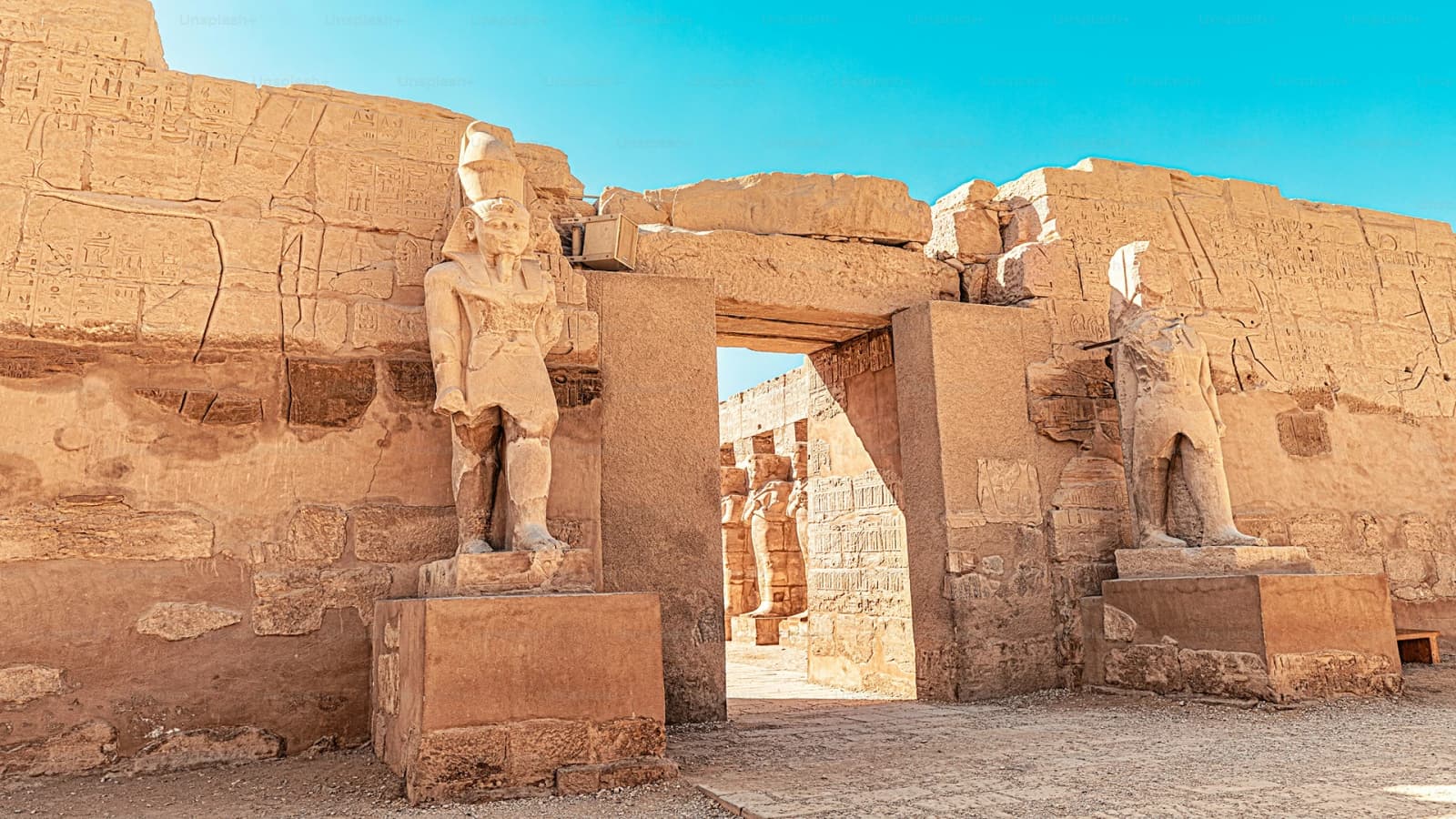
Karnak is a vast complex of temples, chapels, and pylons built and expanded over roughly two thousand years. Its scale is staggering — it's less a single temple than an entire sacred city dedicated mainly to the god Amun-Ra. It's a highlight of any Luxor visit; see the Luxor guide.
What is the Great Hypostyle Hall?
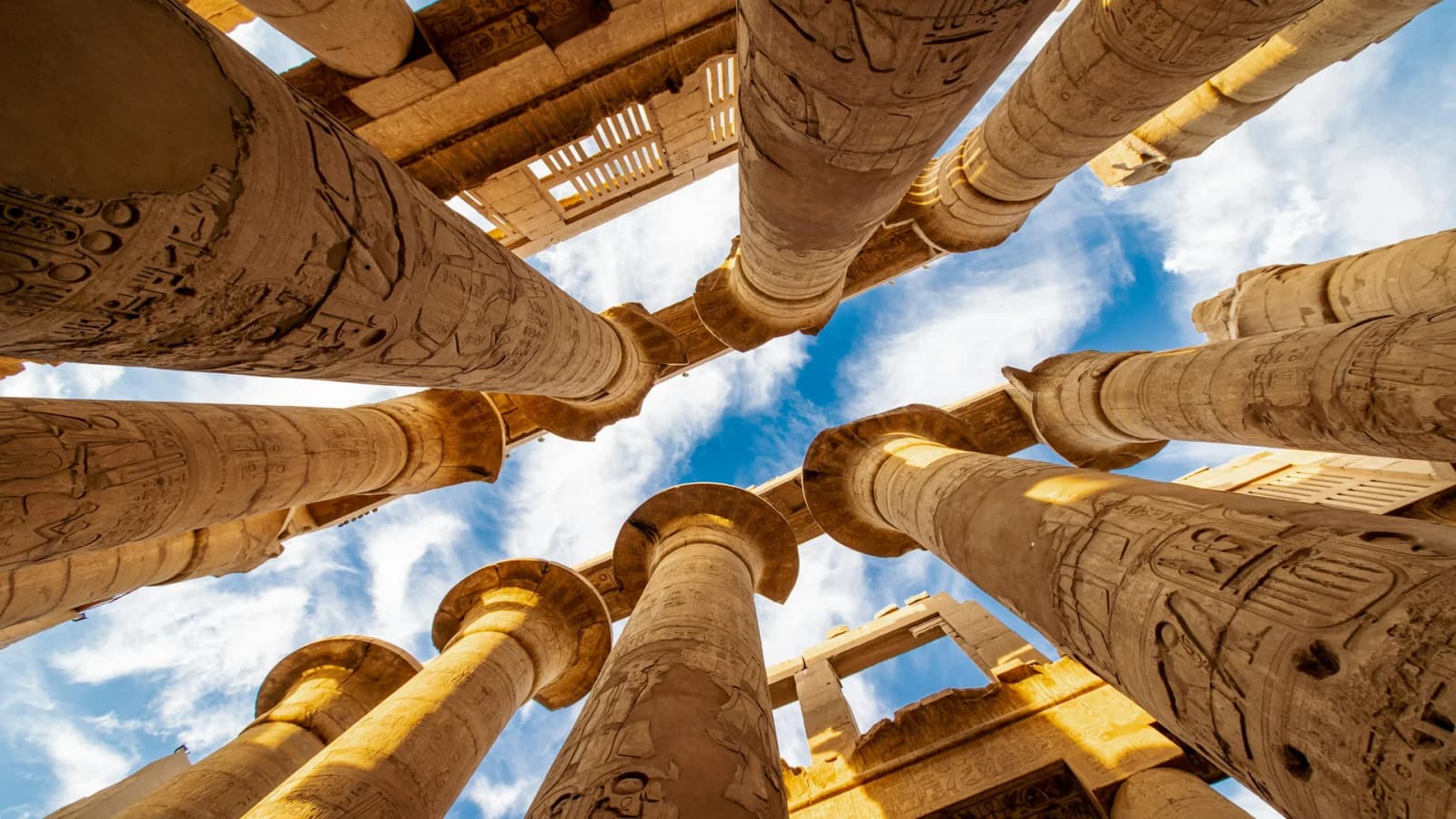
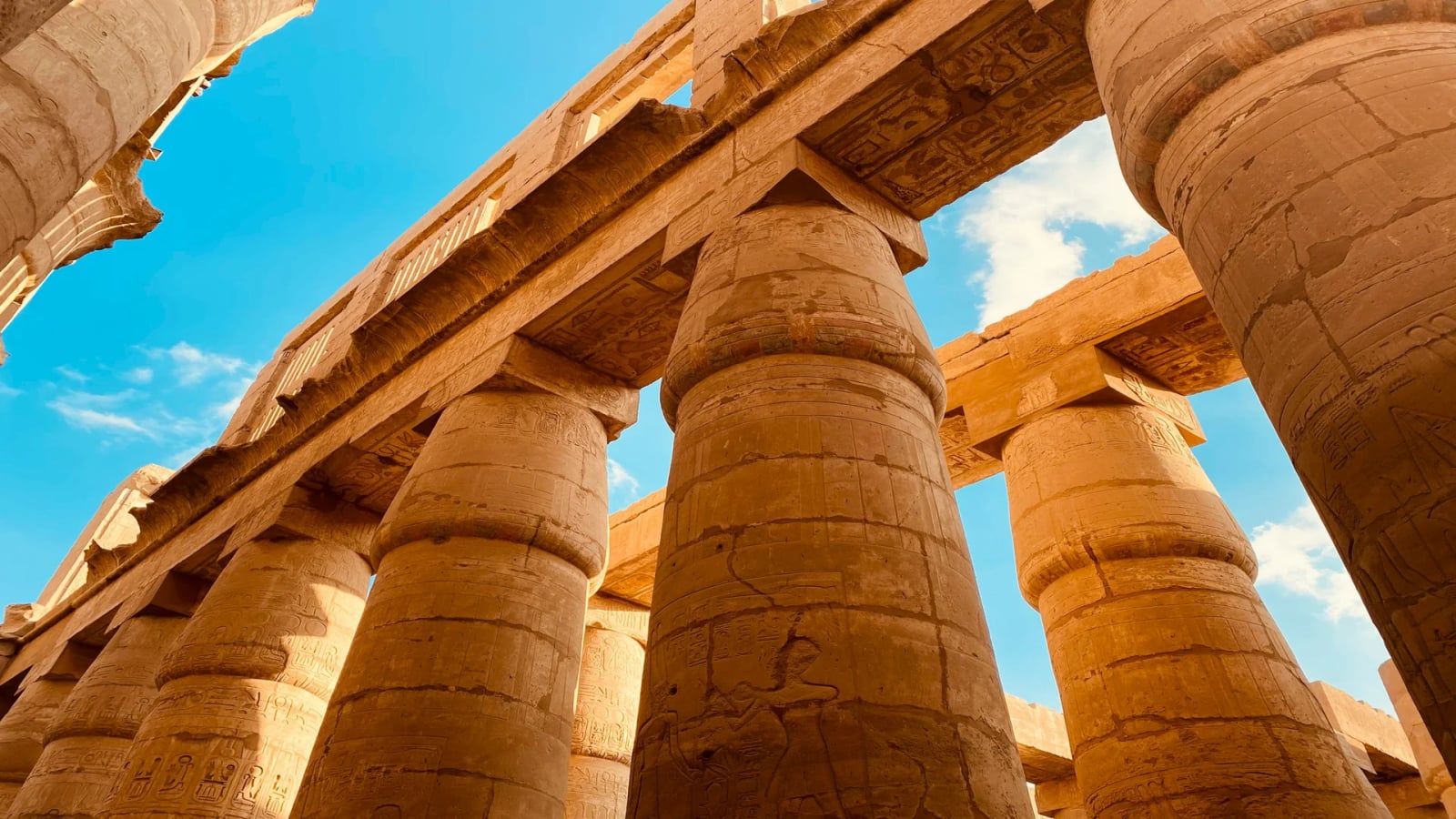
Karnak's most famous space is the Great Hypostyle Hall, a forest of 134 massive columns, many still carrying traces of ancient color. Standing among them is the signature Karnak experience and one of the great sights of ancient Egypt.
What is the Avenue of Sphinxes?
The Avenue of Sphinxes is the ceremonial road once connecting Karnak and Luxor Temples, lined with sphinx statues. Restored and reopened in recent years, it links the two great East Bank temples along the ancient processional route.
What is Luxor Temple?
Luxor Temple sits in the heart of the modern city and is especially atmospheric in the late afternoon and after dark, when it's beautifully lit. Smaller and more compact than Karnak, it's an easier, very photogenic visit.
When should you visit the temples?
Karnak is best earlier in the day before peak heat, while Luxor Temple is magical in the evening light. In a single day, many tours do Karnak in the morning with the Valley of the Kings — see the and pair it with the . For seasonal timing, see the .